Jun 21

Lu Verne school closes in consolidation

It’s not ABCWLT, but it could have been.

Algona-Burt-Corwith-Wesley-Lu Verne-Titonka, but officially just Algona Community, becomes Iowa’s largest consolidated single-high-school district on July 1. Western Dubuque remains larger, barely, and MVAOCOU is two separate districts, for now. A district that was just Algona and Whittemore 30 years ago has drastically expanded as Kossuth County’s population drastically decreased.

Consolidation between Algona and Lu Verne, which was effectively the old CWL area, was approved last September, along with a revenue purpose statement and PPEL levy for the enlarged district. That triple vote, incidentally, is now banned under the “property tax reform” law unless it takes place in November.

I hadn’t seen official word that consolidation would mean the closure of the Lu Verne school, but I reached out to the school and found out that is indeed the case. There were plenty of clues, for example, this photo from Algona Publishing showing the entire student body for the “final chapter”. That 2022-23 group did not include kindergarten, based on the May 2022 board meeting. There’s also the Lu Verne school’s Facebook page (still under the CWL name), which has made reference to the last events taking place at the school. There are posts with photos inside the gym, visible in the background of the linked class photo, that remained intact when the original school building was demolished. The gym was built in 1938-39, according to news accounts, and is very narrow on the edges. (See here and also here. Maybe. I don’t know if the Facebook page can/will be kept up or “memorialized”.)

It’s worth reprinting the first half of the February Lu Verne school board meeting, not just in case the website vanishes, but to convey the finality.

The Lu Verne Board of Education met February 15, 2023 with Collins, Holmes, Legler, Mitchell present. Others present included Supt. Hueser, Secy. Wempen. Vice-Pres. Legler called the meeting to order at 5:15 p.m.

Sec’y Wempen administered the oath of office to President Mitchell. President Mitchell took over the meeting.

No one was present for the Public Hearing, which opened at 5:17 p.m. The Public Hearing closed at 5:17 p.m.

Motion by Collins, seconded by Legler to approve the conveyance of real property to the City of Lu Verne. Ayes: Holmes, Legler, Collins, Mitchell. Nays: None. Motion carried.

Posted in Schools | Comments Off on Lu Verne school closes in consolidation
Jun 19

More Iowa papers reducing print days


May 21, 2023: The fifth-to-last Sunday Mason City Globe Gazette carries an editor’s note about the paper eliminating three of its six print publication days. I bought this at the Lake Mills Casey’s for $4.

Four of Iowa’s 11 newspapers that print Sunday editions, including two of the largest in the state, are dropping to three print days a week.

The Council Bluffs, Mason City, Sioux City, and Waterloo papers, all owned by Lee, will have print editions only on Tuesdays, Thursdays, and Saturdays. The changes, starting tomorrow, were announced last month and covered by Bleeding Heartland. I found out about it through the purchase of a print newspaper (above), which seems both fitting and ironic.

I am not entirely a disinterested party here, since I work at what is now one of only two Iowa-based newspapers that print on both Saturday and Sunday. Besides the Gazette, the Quad-City Times is still seven days a week, as is the Omaha World-Herald, which has significant circulation in Iowa.

The affected papers will be delivered by mail instead of by carriers, meaning those white rectangles with the paper’s name on them are now fit only for museums. This is a bigger change for the Waterloo-Cedar Falls Courier, since it has traditionally been an afternoon paper.

UPDATE 7/5/23: …yeah

Posted in Iowa Miscellaneous | Comments Off on More Iowa papers reducing print days
Jun 16

Central command

Let’s go rollin’ on the Turkey and Wapsipinicon rivers.

  • Due to it name(s), the reorganization history of the school district headquartered in Elkader was elusive.
    • First, Elkader and Littleport voted to form the Consolidated Center School District (Clayton County Register, 12/11/52), or possibly the Consolidated Independent Center School District of Elkader (CCR, 1/15/53), or possibly the Independent Central Consolidated School District (CCR, 4/30/53).
    • Then a second vote added Elkport-Garber and St. Olaf before the 1953-54 school year began (CCR, 7/16/53).
    • In July 1954, which meant it didn’t take effect until July 1955, the district’s territory expanded. According to a legal notice in the CCR on June 24, 1954, the district was to be called Central Community School District, but according to a legal notice on April 21, 1955, the district was to be called Independent Central Community School District. Either way, this is when “Community” was added to the name.
    • That’s all separate from adding Volga, which according to the legal notice on January 19, 1961, specified “Central Community School District.”
    • “Central Clayton Community School District” was right there the whole time! It’s still available today!
    • Also, is there any chance the Elkader Public Library and Clayton County Community History Archive could merge their Advantage Preservation websites?
  • The vote to form the current Central (Elkader) district took place January 30, 1961 — one day before another vote elsewhere in Iowa to form … Central Community School District of Clinton County. But it very sparingly used “of Clinton County”, even in formal bond language (DeWitt Observer, 2/2/61, 2/12/76, 3/3/04). It preferred calling its sports teams Central DeWitt, and most everyone humored them until the 2014 boys’ state basketball tournament, when due to a character limit on the ribbon scoreboard the team appeared as “CClinton” and that sent the entire district into a tizzy. I am not making this up.
    • That 2004 bond issue for a new high school building, despite substantial support in letters to the editor, was destroyed in Low Moor, Grand Mound and Welton (DWO, 3/13/04). Welton’s school, the only one left outside DeWitt, closed in 2005 (DWO, 6/11/05).
    • The 1961 creation of the district left two “donut holes”, one-room schools that did not participate in the consolidation vote. One was named Unity, between DeWitt and Grand Mound, and the other was North DeWitt, north of the city. They did not officially become part of Central until 1966 and were Clinton County’s last one-room schools. (DWO, 11/24/60, 7/21/66, 9/1/69)
Posted in Schools | Comments Off on Central command
Jun 14

Mid-century Corridor school history

Information on schools in the Cedar Rapids/Iowa City area covers enough time and space that it was best to pull them out into their own post. Dates are from Cedar Rapids Gazette articles.

  • Toddville merged with Alburnett in 1954 (1/24/54), although Toddville high schoolers went there in the fall of 1953 (8/11/53)
  • College Community/Cedar Rapids Prairie:
    • Started as a consolidated rural school district named College Township, consisting of nine one-room schools (1/14/51). I cannot find a news story specifically about consolidation, but a photo feature in the Gazette on April 26, 1953, said “College township reorganized its school district two years ago”.
    • The January 1951 bond referendum, for a 12-classroom elementary building, failed by seven votes (1/20/51). The school immediately turned around and did it again weeks later (2/25/51, 3/2/51).
    • The unified elementary building, delayed a year from original projections, opened in 1953. It later was named Prairie Heights and recently had significant renovations (1/20/51, 8/21/51, 9/28/52, 4/26/53, 12/11/20).
    • Added Western school, on the south edge of the county, in 1953 (4/28/53).
    • Became “College Community” when College Township, Ely, and Fairfax consolidated in 1954 (5/16/54, 6/8/54, 8/18/54), but did not field a high school right away (12/19/54)
      • Those news articles contradict the school’s website, which is a year off in the introductory segment of the timeline (1954 vs. 1953)
    • Needed the power plant at C Street SW and Ely Road SW for its property tax base (5/16/54), as the city of Cedar Rapids was almost entirely north of the Chicago & North Western Railroad tracks at the time (10/30/55)
    • Was named “Prairie High” through a seventh-grader’s contest entry (4/1/55)
      • The news article contradicts the school’s website, which is a grade off (seventh vs. eighth)
    • Began phasing in students to its new school site in the 1956-57 school year, in a dance that at one point had first-graders in the new high school building (11/25/56). A separate bond issue was used to build a gymnasium (3/17/57). It did not have a graduating class until 1959.
    • DID NOT close the Ely school in 1958, despite what the historical marker in front of the building says. That’s based on multiple articles after that date, its presence in the Cedar Rapids phone book, and the Prairie website. It was also used as a polling place through the 1960s. (6/2/60, 8/14/68, 10/27/71)
    • Added Shueyville and Swisher in 1960 (9/11/60)
  • Historic Cedar Rapids schools:
    • Hayes Elementary, which opened in November 1915, got an addition in 1954. It was closed in 1981. At the time of the demolition of the oldest segment in 1982, it was billed as the oldest in the district, although archives show construction started no earlier than mid-1914. Presently, the 1954 addition houses Four Oaks human services agency. (6/25/14, 1/3/15, 4/12/81, 3/2/82, 2/7/04)
    • For the next four decades, Garfield and Arthur, built in 1915, were the district’s oldest schools, but they are scheduled to close in 2024 (1/23/23).
    • Garfield kept escaping the chopping block, including in 1985, when the district closed a 15-year-old school instead (3/17/85).
      • Technically, Squaw Creek was 14½, since it wasn’t completed until the middle of the 1970-71 school year. Development in the area didn’t happen as expected (5/31/85).
    • In April 2023, the Cedar Rapids school board voted to demolish Harrison Elementary, built in 1929-30. This decision overruled a task force and historic preservationists. A new elementary on the site that would combine Harrison and Madison attendance zones is planned to open in 2025. (5/9/23; also KCRG, 4/25/23)
  • Clear Creek:
    • Formed in 1961 as a consolidation of Clear Creek Township, Cosgrove, Madison Township, Oxford, and Tiffin (6/11/61). (Wikipedia incorrectly says 1964.) The Madison Township school was used as an elementary at the start, in a building so old it had a water pump in front (9/3/61). I couldn’t find when that one closed.
    • Cosgrove kept a high school for two years. “The Iowa Valley league, won by Cosgrove a year ago, is no longer in existence. Cosgrove and Oxford have joined together in the new Clear Creek reorganized district.” (11/21/63)
    • Clear Creek’s high school moved from Oxford to Tiffin in 1970, following the failure of five bond issues and passage of a sixth (6/10/64, 5/4/66, 8/3/69, 2/15/70). The bond issues had varying locations for the proposed central high school.
    • In the 21st century, unlike the 1980s, the now-Clear Creek Amana district doesn’t have any problems passing bond issues.
    • And speaking of Amana: The oldest part of the current elementary school in Middle Amana opened February 1, 1954. It replaced a school building in South Amana from 1879 and one in Main Amana as well. The story was on the same page as the Toddville-Alburnett tipoff at the top of this list (1/24/54). That is how you bring a blog post full circle. 🙂
Posted in Schools | Comments Off on Mid-century Corridor school history
Jun 12

Strike up the band, strike out the band law

Clarinda votes for bands.
Authorizes two mill tax to pay for all.
Clarinda, Iowa, March 28, 1921, voted almost two to one a two mill tax for the support of its bands of music. The tax will be available for use in the year 1922, the new Iowa law having been adopted too late for the levy to be made this year. The money will come into use next year, however, when all the taxpayers will share in the expense of maintaining band organizations for the benefit of the public.
That all Iowa municipalities may now support bands with public money is due to Major George W. Landers of this city as the prime mover. The major is what might be called a born musician. … As music thrills him, so in turn he has thrilled a great many thousands of people through his own playing or by the splendid musicians he has either trained or led. …
The bill was introduced in the house of representatives by J.H. Stimson, the member from this (Page) county, and in the senate by H.I. Foskett, the senator from this (Page-Fremont) district, both of whom worked ably for its passage, and both of whom are entitled to the highest commendation in connection with their support of the measure … as it carried by an almost unanimous vote in both houses. It was also much helped by the influence of Gov. Nate E. Kendall in its favor, who strongly endorsed it.
The major’s own statement is, “I am content to know that I have been instrumental in giving Iowa a music law, which will mean much to our coming generations, educationally, socially and morally.”
Clarinda Journal, March 31, 1921

2 are attending bandmaster meet
Major George W. Landers and J.D. Palmer are in Sioux City three days this week attending the state bandmasters association annual convention. … On Tuesday evening [Landers] will conduct the massed bands as they play “Iowa Band Law” march written by Karl King and dedicated to Major Landers.
Clarinda Herald-Journal, June 7, 1937

The complete public-domain “Iowa Band Law March” is available from this site (direct PDF with short bio of King). The Our Iowa Heritage blog has a long entry about King. Here’s a recording of the “Iowa Band Law March” on YouTube. This march, unlike King’s “Barnum and Bailey’s Favorite” or anything by John Philip Sousa, does not hate clarinets.

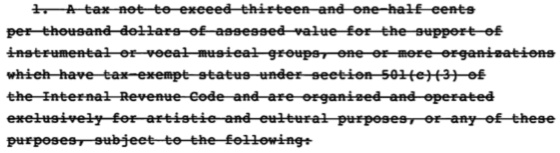
On July 1, 2024, the law honored by one of America’s greatest march-writers will be history. It’s one of many purpose-specific property tax referendums that has been rolled into a general fund levy, with caps on that levy. This happened with the same “property tax reform” law that affected timing of school bond issues.

The Iowa Band Law is dead. May the bands play on.

Posted in Iowa Miscellaneous | Comments Off on Strike up the band, strike out the band law
Jun 09

3 Tama County churches in United Methodist schism

More than 80 United Methodist churches in Iowa are ending their affiliation with the denomination. (Stories: Register, Gazette) The action is part of a slow-motion schism over gay rights that the COVID pandemic has made extra messy.

The Garwin, Geneseo, and Gladbrook churches are among those that are leaving, effective June 30. They are part of a cluster that spreads west to Owasa and Laurel. There are also clusters in Linn County and the Mahaska-Keokuk county area, but the map spreads from Doon to southern Lee County. The 83 churches leaving are only 11% of the total in the Iowa Conference, but many of them are the only United Methodist church in town. Here’s the disaffiliation agreement for Geneseo. The others are the same except for names and signatures.

The schism was supposed to be voted on at the UMC General Conference in May 2020. It didn’t happen, because 2020 happened. Instead, churches that wish to leave are doing so under a plan from 2019 that expires at the end of this year. For more information, see this Religion News Service story from last May and Associated Press story from last October.

An option for the departing churches is the Global Methodist Church, which launched last year and is keeping prohibitions on gay marriage and clergy. That is where the Marshalltown church that decided to leave is going, reports the Times-Republican.

Posted in Tama County | Comments Off on 3 Tama County churches in United Methodist schism
Jun 07

Jefferson Highway notes in Decatur County


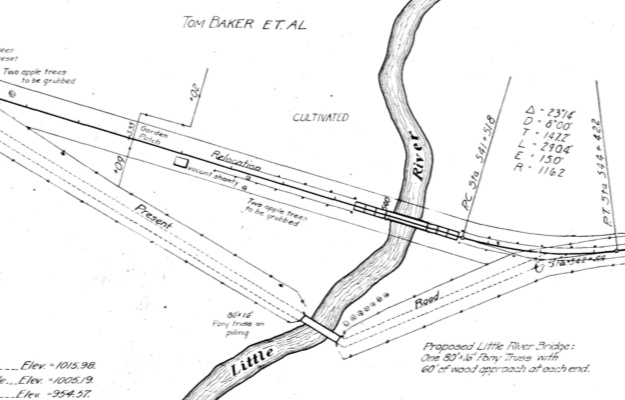
This 1918 construction document for “Inter County Highway” shows the plan for a truss bridge south of Leon. Note the intricate illustration for the river.

The 2023 Jefferson Highway conference starts today in Mason City.

The Jefferson Highway, also known as the “Pine to Palm Highway”, ran from Winnipeg to New Orleans. In Iowa, this became IA 1 in 1920. Today, for the most part, it follows the US 69 corridor south of Ames and the US 65 corridor north of Colo, overlapping the Lincoln Highway in between. A few years ago, it was signed as a Heritage Byway in a manner identical to that of the Lincoln Highway, complete with loops for old alignments. The most notable loop is Ankeny to Nevada via Elkhart and Shipley. Here’s the Iowa DOT online map. Here’s a complete Winnipeg-to-New-Orleans map with points of interest.

Unfortunately, signage of the route leaves a lot to be desired. It completely disappears between Indianola and the intersection of University Avenue and East 13th Street just north of I-235. For now, I’m going to leave Des Moines and other locations aside and pick out/pick on two big issues in Decatur County.


May 20, 2023

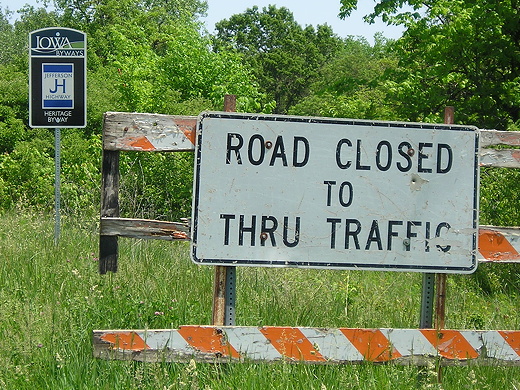
The Jefferson is signed very cleanly onto “Old 69 Highway” between Davis City and Leon. The problem is, it heads right to a bridge that has been closed since the end of 2016, according to supervisors minutes. A certain unsuspecting traveler found this out the hard way, but at least 255th Street was there to avoid a full backtrack. The present county map marks old 69 as a continuous road.

Northbound only, there is signage for a loop following 250th Avenue and Popcorn Road. This is the route used before 1924. Much of 250th here is graded dirt and likely would have been considered decent for someone driving west of the Mississippi River in the 1910s, as long as it hadn’t rained much in the past 48 hours. Getting a steady 25 mph was an achievement back then. However, the turn onto Popcorn isn’t signed, the return to US 69 isn’t signed, and there is no signage on 69 at Popcorn indicating the loop. A mile north, at the east end of former IA 258, there’s a double-arrow for J14’s intersection with the Jefferson.

The 1921 Blue Book for the Upper Midwest, Vol. 10, covers major routes for Iowa north of and including the Lincoln Highway, with a special extension of the Jefferson Highway south to Kansas City. In Leon, this routelog uses 7th Street instead of 10th Street to go over a block from Main Street to present US 69. This illustrates a difficulty with trying to retrace auto trails: In-city routes were at times closer to suggestions than hard-and-fast designations. They could change when a certain street was paved or on the whim of a city council.

In the 21st century, though, good signage is imperative.

Posted in 1920 Highway Sytem, Highway Miscellaneous | Comments Off on Jefferson Highway notes in Decatur County
Jun 05

Last bell at Crescent Elementary


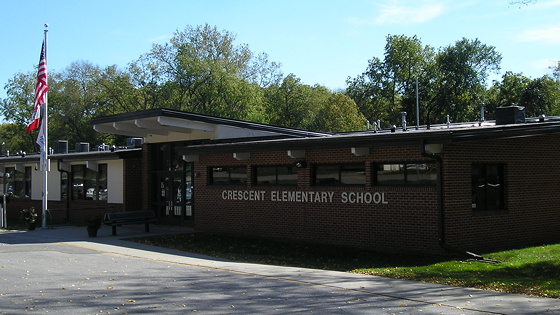
October 15, 2021: “Crescent Elementary School is the heart of the community,” the Council Bluffs district says on a webpage that probably won’t exist by this time next year.

Crescent Elementary had its final day May 25. The student population in the area wasn’t enough to justify keeping it open and the Council Bluffs school board voted earlier this year to close the site. WOWT has a news story with links to its previous coverage.

Posted in Schools | Comments Off on Last bell at Crescent Elementary
Jun 01

2023 state map doesn’t have the blues, it has the teals

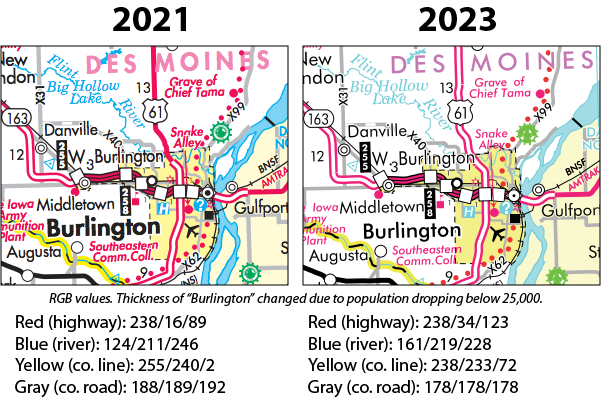
Memorial Day weekend in odd years means the release of the new Iowa highway map. The 2023 map (extremely large PDF) was available online a week ago. But when I loaded it, things felt off. The shade of blue was noticeably different, and noticeably duller. The overall border of the state map is a better blue than what’s shown below right, which is very odd. The inset maps on the back still have the correct/previous coloring.

The above comparison is done in RGB (red-green-blue) screen values rather than the CMYK printing process (cyan-magenta-yellow-black). Here’s an explanation of the color wheel and the difference between additive and subtractive colors.

The 2023 map’s blue color has a lot more red value in it and less blue, tilting it toward more of a teal than the brilliant sky blue it had been. The red for the highways got a bit more green and blue, giving it a very slight pink tinge. The yellow is duller with its larger dose of blue, looking more like a highlighter mark after it’s been there for a while. The green for interstate highways, not seen in the clip, seems duller as well.

Typography-wise, lettering for all the special features appears to have been thinned out. The county names definitely got thinner and shifted from a dusky pink to lavender.

The 2023 map has been updated to reflect populations from the 2020 census. Burlington, Clinton, and Fort Dodge all fell under the 25,000 threshold, so they get less prominent type. Waukee just missed that level, but hit it by July 2021 according to census estimates, surpassing those county seats and also Ottumwa. Harlan, Shenandoah, and Vinton fell below 5,000, so their names are also diminished. (But Vinton now looks to be in the under-1000 point size, smaller than Urbana, which shouldn’t be the case.)

Highway-wise, the most notable changes on the map are the extension of four-lane US 61 north of Burlington to near Mediapolis, which will be done very soon, and extension of four-lane US 30 to east of IA 21, but without an interchange square because that’s not finished either. The Council Bluffs inset still shows NE 85, which is no longer a highway in the Omaha area.

A printed map will look different from what’s on a screen, but these colors are decidedly VERY off. Is it due to the blue border? Perhaps the map was processed with a different color profile/color management setting?

UPDATE: OK, now things are getting weird. All of the above criticism applies when you view the state map PDF as a whole. But, if you go to the individual sections that are available on the map page, the colors there look like they have looked before. Here’s the southeast corner. I’m baffled.

Posted in Maps | Comments Off on 2023 state map doesn’t have the blues, it has the teals
May 30

Ring the bells for Traer’s Big Birthday Bash

The original plan for June 3 was to have a kickoff for Traer’s sesquicentennial celebration that would culminate with the Winding Stairs Festival in August. Instead, the Big Birthday Bash got really big.

Here’s a full schedule of events (via Facebook). The free cake for Traer’s 150th birthday starts at noon. The events are all at Taylor Park, because restoration of the gazebo is a focus of this year’s celebration. Unfortunately, I’m unable to attend, meaning that both the alumni band and kolache-eating contest will be down one participant.

The centerpiece is a model of the Iowa State Campanile, which has 27 bells. The carillon has a special connection to Traer.

New chimes at Ames to honor name of Stanton
Former Traer girl to administer bequest of late husband at Iowa State College
Mrs. Julia W. Stanton, dean of women at Iowa State College, former Traer girl and a sister of Mrs. R.C. Wood, will supervise the addition of twenty-six new bells to be purchased as a memorial with money left for the purpose by her late husband.
Traer Star-Clipper, July 20, 1928

Unfortunately, Stanton would not be able to see the bells installed. She died of a blood clot December 14, 1928.

New carillon bells for Ames
The twenty-six new bells for the carillon of the Iowa State college campanile at Ames arrived in New York Monday, July 29, aboard the steamship Albertie from England. The bells range in weight from five to 5,100 pounds, the total weight being 21,000 pounds. Workmen have completed remodeling the interior of the campanile to receive them. Funds for the bells, which will cost $25,000, were provided in the will of the late Dean Edgar W. Stanton.
Traer Star-Clipper, August 2, 1929

Iowa State now has 50 bells in its campanile. Northern Iowa recently had its 47 bells restored and nine new ones added for a total of 56. (President Wintersteen, we cannot allow a carillon bell gap!)

Posted in Tama County | Comments Off on Ring the bells for Traer’s Big Birthday Bash